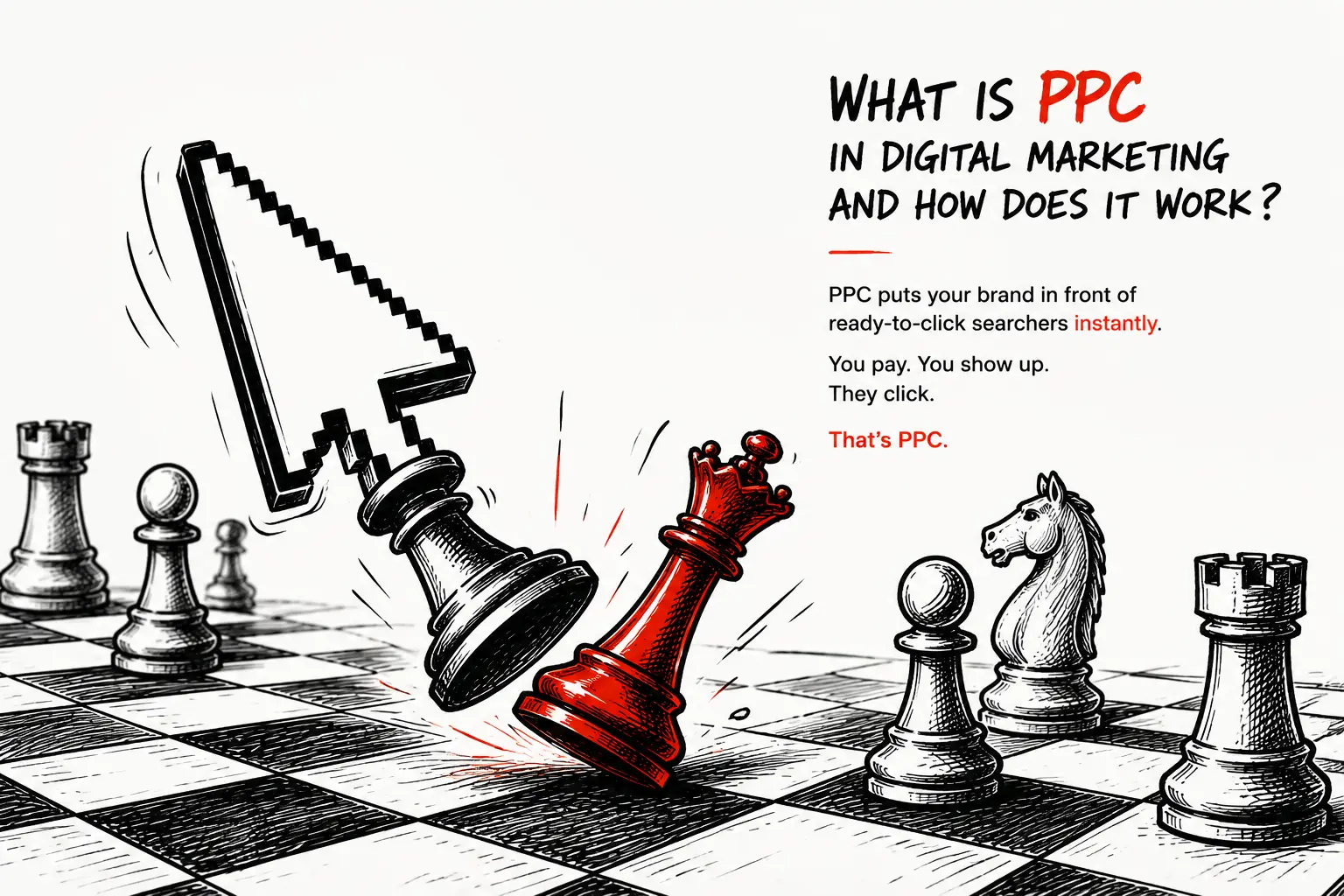
PPC in digital marketing puts a brand in front of ready-to-click searchers instantly. Unlike organic strategies, results appear the moment a campaign launches. This guide covers what PPC marketing means, how pay-per-click advertising works, the main campaign types, and how to build a campaign that actually performs.
What Is PPC Marketing?
PPC stands for pay-per-click — the PPC full form in digital marketing. So what is PPC in marketing, exactly? It’s an advertising model where businesses pay a fee each time someone clicks their ad, rather than earning visibility organically. This is what is pay per click PPC marketing means at its core: paying for results, not exposure.
PPC meaning in digital marketing centers on control: advertisers choose keywords, audiences, and budgets, then pay only for actual engagement. This makes it measurable and adjustable in ways traditional advertising rarely allows.
Search platforms, social networks, and display networks all offer PPC placements, giving brands multiple ways to reach specific audiences based on intent.
How Pay-Per-Click Advertising Works
Pay-per-click advertising runs on an auction system. Advertisers bid on keywords or audience targeting, and platforms rank ads based on bid amount combined with ad relevance and quality.
When a user searches a targeted keyword or fits a targeted audience, the platform selects which ads to display and in what order. The advertiser only pays when someone clicks through, not simply for the ad being shown.
This structure means well-optimized, relevant ads can outperform higher bids from competitors, since platforms reward quality alongside spend. It keeps costs tied to actual engagement rather than exposure alone. Platforms change these rules often, so keeping up with updates to Google Ads directly affects how competitive a bid needs to be.
Different Types of PPC Campaigns
PPC covers several formats, each suited to a different stage of the buyer journey. As channels evolve, so do the formats available — our look at new age media buying forms covers how PPC fits into that broader shift.
Search Ads
Search ads appear on results pages when someone searches a targeted keyword. They capture high-intent traffic, since the searcher is often actively looking for a solution.
Display Ads
Display ads appear as banners or visuals across a network of partner websites. They’re built for visibility and brand awareness rather than immediate conversion.
Shopping Ads
Shopping ads showcase product images, prices, and details directly in search results. They work especially well for e-commerce, letting shoppers compare options before clicking through.
Video Ads
Video ads run on platforms like YouTube, combining visual storytelling with targeting. They suit brand awareness campaigns and products that benefit from demonstration.
Remarketing Campaigns
Remarketing targets users who already visited a website but didn’t convert. These campaigns re-engage warm audiences, often at a lower cost than reaching entirely new users.
Benefits of PPC in Digital Marketing
The importance of PPC in digital marketing comes down to speed that organic strategies can’t match — campaigns go live and start driving traffic within hours. This makes it valuable for time-sensitive promotions or new product launches.
It also offers precise targeting, letting advertisers reach specific keywords, locations, demographics, and even retarget past visitors. Every dollar spent is measurable, with clear data on clicks, conversions, and cost per result. This is where the role of PPC in digital marketing extends beyond search — a performance marketing company can apply the same measurable approach across paid social and display alongside search ads.
Budgets stay fully controllable too. Campaigns can scale up or pause instantly based on performance, giving marketers flexibility that longer-term strategies don’t offer.
How to Create an Effective PPC Campaign
A strong PPC campaign follows a clear structure from research through ongoing management. Businesses without in-house resources often bring in specialists, such as a PPC company in Mumbai or a best PPC company in Delhi, to manage this process end to end.
Keyword Research
Effective campaigns start with keywords that match real search intent and volume. Overly broad or irrelevant keywords waste budget on clicks unlikely to convert.
Ad Copy Creation
Ad copy needs to be clear, relevant, and action-driven. It should speak directly to the searcher’s intent and include a specific reason to click.
Landing Page Optimization
Clicks only convert if the landing page matches the ad’s promise. A slow, unclear, or mismatched page wastes the spend that earned the click in the first place.
Budget and Bid Management
Setting realistic budgets and adjusting bids based on performance keeps spend efficient. Regular review prevents budget from concentrating on underperforming keywords.
PPC Metrics Every Marketer Should Track
Click-through rate shows how compelling an ad is to its audience. Conversion rate reveals whether that traffic actually takes the desired action once it lands.
Cost per click and cost per conversion measure efficiency, while Quality Score affects both ad rank and cost. Tracking these together shows whether a campaign is genuinely profitable, not just active.
Common PPC Mistakes That Waste Budget
Targeting overly broad keywords often burns budget on irrelevant clicks. Ignoring negative keywords compounds this, letting ads show for searches with no real intent to convert.
Sending traffic to a generic landing page instead of one matched to the ad is another common mistake. Without regular optimization, campaigns quietly bleed budget on underperforming keywords and ads. Social platforms carry their own pitfalls too — our breakdown of common Facebook ad mistakes covers errors that quietly drain budget the same way.
Frequently Asked Questions
What industries benefit most from PPC?
E-commerce, professional services, and industries with clear high-intent searches — like legal or healthcare — often see strong PPC performance due to immediate conversion potential.
How much budget is needed to start PPC?
Budgets vary widely by industry and competition. Starting small and scaling based on performance data works better than committing heavily before testing results.
What is Quality Score in PPC?
Quality Score measures ad relevance, expected click-through rate, and landing page experience. Higher scores can lower costs and improve ad placement.
Is PPC better than social media advertising?
Neither is universally better — PPC often captures high-intent search traffic, while social advertising excels at awareness and reaching audiences before they actively search.
How can PPC campaigns be optimized over time?
Regularly reviewing keyword performance, refining ad copy, adjusting bids, and testing landing pages keeps campaigns efficient as data accumulates.
Clicks only pay off with the right strategy behind them. Let’s connect and build a PPC campaign built to convert.