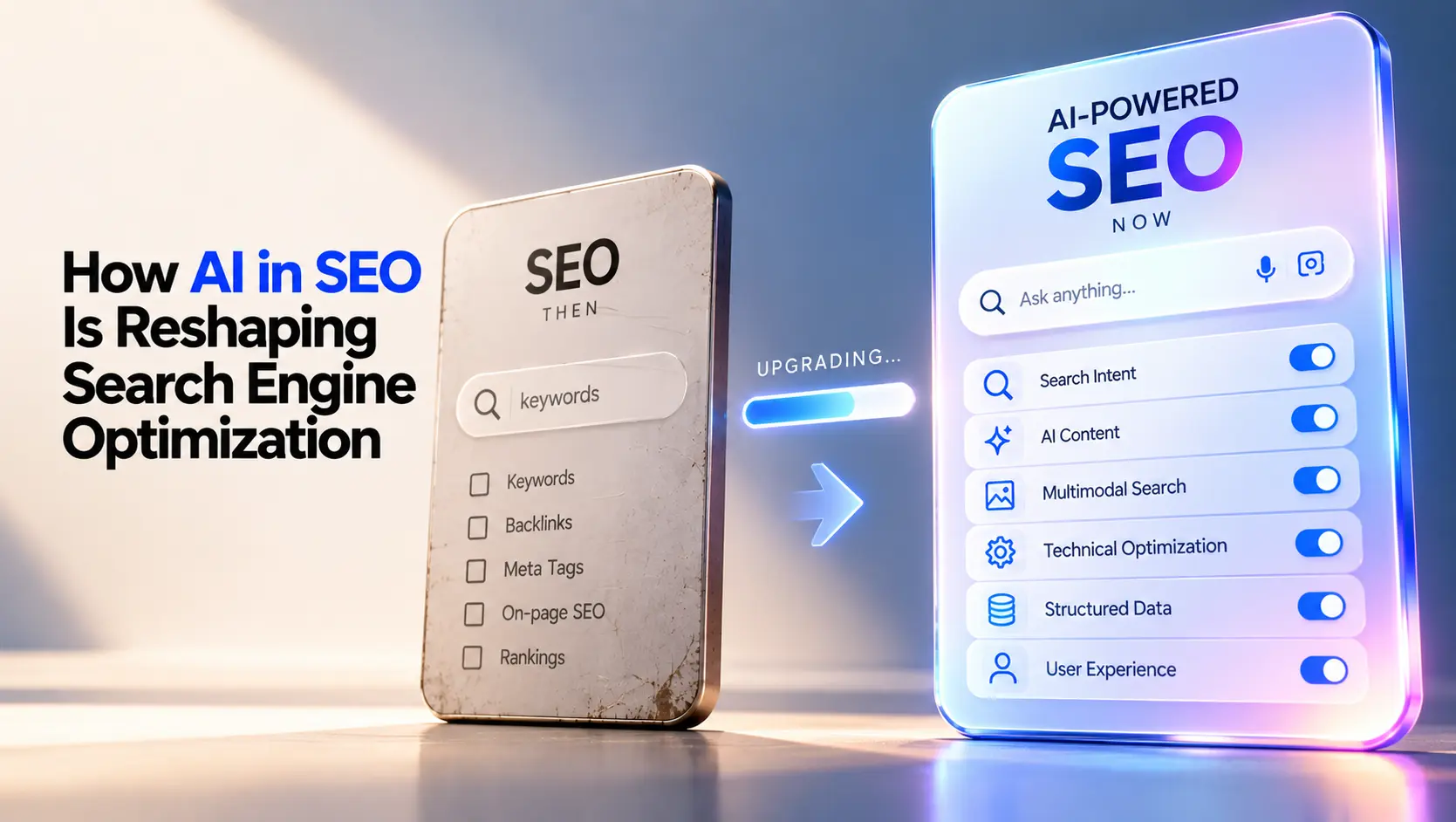
Understanding EEAT in SEO is essential for businesses that want to create credible, useful and people-first content. E-E-A-T stands for Experience, Expertise, Authoritativeness and Trustworthiness. Rather than being a single ranking factor, it provides a framework for understanding the qualities Google looks for when evaluating whether content is helpful, reliable and suitable for searchers.
Defining Core EEAT SEO Principles
EEAT SEO focuses on demonstrating why users and search engines should trust a website and its content. Google uses many signals within its automated ranking systems to identify useful and reliable information, while its Search Quality Rater Guidelines use E-E-A-T as an important evaluation concept.
For businesses researching what E-E-A-T is in SEO, the key point is that E-E-A-T is not a checklist for manipulating rankings. It is a practical framework for improving content quality, credibility, transparency and usefulness. Google also states that trust is the most important component.
Breakdown of Experience, Expertise, Authoritativeness and Trustworthiness
The four components of SEO EEAT work together to help establish content credibility. Their importance can vary depending on the topic, particularly for subjects involving health, finance, safety or other areas that could significantly affect people’s lives. Google refers to such subjects as Your Money or Your Life, or YMYL, topics.
Experience in Content Creation
Experience demonstrates that content reflects genuine first-hand involvement with a subject. This could include personally using a product, completing a process, visiting a destination or applying a strategy in a real business environment.
Google added the additional “E” for Experience to its Search Quality Rater Guidelines in December 2022, recognizing that first-hand knowledge can be especially valuable for certain types of queries.
Brands can demonstrate experience through original examples, case studies, photographs, testing methodologies, customer insights and observations that cannot easily be produced by simply summarizing other websites.
Expertise and Topical Authority
Expertise relates to the knowledge or skill demonstrated by the content creator. The level of expertise users expect depends heavily on the subject.
Businesses trying to create Google-friendly content should ensure that important claims are accurate, adequately explained and reviewed by suitably knowledgeable contributors when necessary. Author biographies, professional credentials and expert review processes can provide additional context about who created or verified the information.
Authoritativeness Across Your Niche
Authoritativeness concerns the reputation of the creator or website within a particular subject area. Consistently publishing useful content, earning legitimate mentions, attracting relevant links and becoming a recognized source can help reinforce authority over time.
Reputation is particularly important for brands operating in competitive or sensitive industries. Monitoring third-party coverage, customer feedback and brand mentions may therefore complement the work handled internally or by online reputation management companies.
Trustworthiness as the Central Pillar
Trustworthiness sits at the centre of E-E-A-T. Google explicitly describes trust as the most important of its four elements because experience, expertise and authority have limited value when users cannot trust the information or its source.
Websites can strengthen trust through accurate information, transparent authorship, clear contact details, secure browsing, accessible policies, reliable sourcing and honest commercial disclosures.
The Impact of the EEAT Google Update on Search Rankings
The phrase EEAT Google update is commonly used in SEO discussions, but Google has not announced a standalone ranking update named the “E-E-A-T update.” The significant change occurred in December 2022 when Google updated its Search Quality Rater Guidelines by expanding E-A-T to E-E-A-T and formally adding Experience. Google also clarified that these guidelines help raters assess its search systems; the ratings themselves do not directly determine rankings.
Therefore, an EEAT update should not be treated like an algorithm change that can be addressed by adding author boxes or making superficial page edits.
Google says E-E-A-T itself is not a specific ranking factor. Instead, its systems use numerous factors and signals that can help identify qualities associated with strong E-E-A-T. These considerations receive additional emphasis for YMYL topics.
The broader emphasis is also consistent with Google’s helpful content update, which was originally introduced to better surface content created primarily for people. In March 2024, the helpful content system became part of Google’s core ranking systems rather than remaining a separate system.
For industries where accuracy can significantly affect users, such as businesses offering Healthcare SEO Services, demonstrating genuine expertise, appropriate review and reliable sourcing becomes particularly important.
Practical Steps to Improve Google EEAT SEO Standards
Improving google EEAT SEO starts with examining who creates your content, how it is produced and why it exists. Google itself recommends considering “Who, How and Why” when evaluating people-first content.
First, make authorship transparent. Add meaningful author information where readers would reasonably benefit from understanding who produced the content. For specialist topics, clearly communicate relevant expertise, practical experience or review credentials.
Second, strengthen the substance of each page. Include first-hand observations, original research, case studies, useful examples and reliable sources instead of simply rewriting information that already exists elsewhere.
Third, build topical depth. Create interconnected resources around subjects where the business has genuine knowledge instead of publishing unrelated articles purely to capture search traffic.
Content maintenance also matters. Periodically review outdated or underperforming pages and determine whether they should be refreshed, consolidated or removed through a carefully planned website content pruning process. Avoid deleting content purely because it receives limited traffic; usefulness and relevance should guide the decision.
Businesses can also work with an experienced seo services company in Bangalore to coordinate technical SEO, editorial standards and reputation signals, but outsourcing alone does not create E-E-A-T. The underlying website still needs accurate information, credible contributors and transparent practices. Finally, maintain clear business details, secure website experiences and accurate policies. Strong E-E-A-T is built through consistent credibility rather than a single optimization tactic.
Conclusion
EEAT in SEO provides a useful framework for creating content people can rely on. Experience, expertise and authoritativeness all contribute to the most important element: trust. Instead of optimizing for E-E-A-T as a single ranking signal, businesses should focus on accurate, original, transparent and genuinely useful content that supports users’ needs.
Frequently Asked Questions
What is EEAT in SEO and why does it matter?
EEAT in SEO stands for Experience, Expertise, Authoritativeness and Trustworthiness. It matters because these qualities help describe the type of useful and reliable content Google’s systems aim to surface, particularly for sensitive YMYL topics.
Is EEAT a direct Google ranking factor?
No. Google explicitly states that E-E-A-T itself is not a specific ranking factor. Its automated systems instead use multiple factors that can identify qualities associated with good E-E-A-T.
How did the recent EEAT update change quality guidelines?
The major EEAT update came in December 2022, when Google added Experience to the existing E-A-T framework. It emphasized the potential value of first-hand experience while preserving the importance of expertise, authority and trust.
How can a site demonstrate Experience and Expertise?
Sites can demonstrate them through qualified authors, first-hand examples, original research, practical demonstrations, accurate explanations, case studies and expert review where appropriate.
Why is Trustworthiness the most critical part of SEO EEAT?
Trust is central to SEO EEAT because users need confidence that information is accurate, transparent and reliable. Google specifically identifies trust as the most important element, with Experience, Expertise and Authoritativeness contributing toward it.