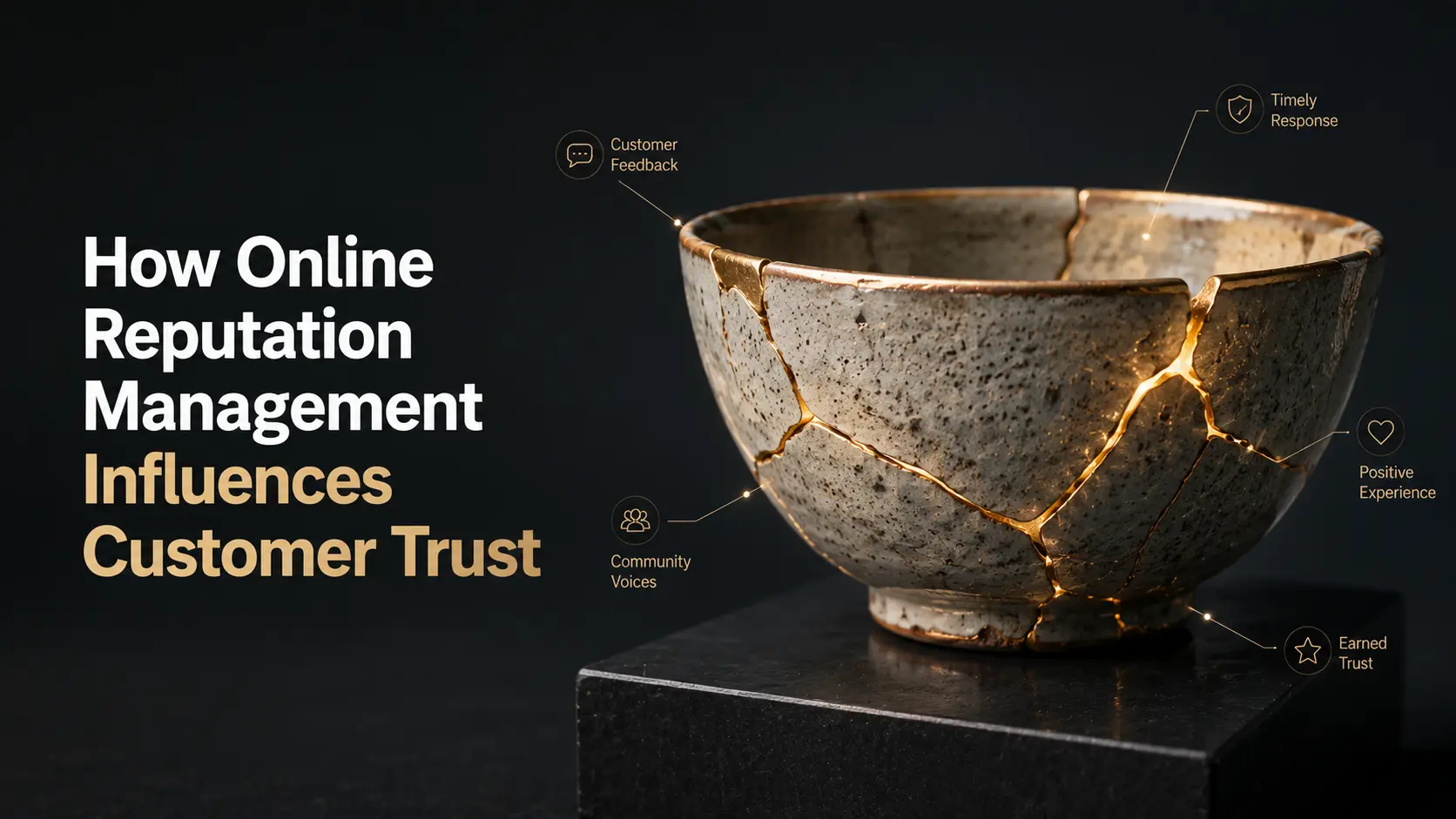
Before a customer ever speaks to your sales team, they’ve already formed an opinion of your business — built entirely from what they find online. Online reputation management shapes that first impression, and by extension, decides whether trust is built or lost before the conversation even starts.
What Is Online Reputation Management and Why Does It Matter?
What is online reputation management? It’s the ongoing practice of monitoring, influencing, and shaping how a brand appears across search engines, review platforms, and social channels. Reputation management matters because customers no longer take a business’s word for its own quality — they verify it independently. Roughly 93% of consumers now read online reviews before making a purchase decision, and nearly as many say those reviews directly influence what they buy. A brand that ignores this reality leaves its most persuasive sales asset — its public reputation — entirely unmanaged, at the mercy of whoever happens to speak about it loudest.
How Online Reputation Shapes Customer Buying Decisions
Trust and revenue are directly linked. A Harvard Business School study of independent restaurants found that a single one-star increase on Yelp produced a 5-9% increase in revenue, with the effect driven almost entirely by how consumers perceived quality signals rather than by actual changes in the business itself. This pattern holds well beyond restaurants: consumers actively avoid businesses that look unproven online, with a large share hesitant to purchase from a company that has no visible reviews at all. Reputation, in effect, has become a pre-purchase credential — customers use it to decide whether a brand is safe to buy from before they engage with it directly.
Core Components of Effective Reputation Management
Brand Monitoring
You can’t manage what you don’t see. Brand monitoring tracks mentions across review sites, forums, news, and social platforms so issues surface before they escalate. This has become urgent: the volume of brand-relevant content published daily has roughly doubled since 2023, and social post volumes across major platforms have grown by around 35% year-over-year, making manual tracking impractical for most brands.
Review Management
Review management means actively soliciting, responding to, and learning from customer feedback. It matters because response habits are watched closely: 88% of consumers expect businesses to respond to reviews, yet only around 5% of businesses actually do so. That gap is a genuine opportunity — brands that close it stand out by default.
Search Visibility Management
This is the practice of ensuring positive, owned content outranks negative or irrelevant results on branded searches. It’s high-stakes work: businesses with even one negative article ranking online risk losing up to 22% of prospective customers, a figure that climbs to roughly 70% once four or more negative articles are visible. Because most searchers never look past the first page of results, what ranks for a brand’s name effectively becomes the brand’s reputation.
The Role of Social Media Online Reputation Management
Social media online reputation management extends monitoring into the channels where customers speak most publicly — and most impatiently. Around 70% of consumers now expect a response to a social media mention within 24 hours, with 40% expecting a reply within the hour. Silence reads as indifference; a swift, helpful reply is observed not just by the person who raised the issue but by everyone watching the exchange, which is why social responsiveness has become a visible, public trust signal rather than a private customer-service metric.
Online Reputation Management (ORM) Best Practices for Brands
Responding to Reviews
Timeliness and tone both matter. Consumers expect a response within roughly three days, and businesses that turn a negative experience around see a high share of customers go on to leave a positive review afterward. A thoughtful reply to a negative review often does more for trust than a dozen unanswered five-star ones — it demonstrates the business is present and accountable.
Managing Brand Mentions
Not every mention happens on a review site. Brands need to track and engage with mentions across forums, social platforms, and niche communities, where conversations are often more candid than on public review pages. With open web traffic declining and AI-driven answers increasingly synthesised from forums and social posts rather than brand-owned sites, shaping how a brand is discussed off-platform has become as important as managing on-site reviews.
Creating Positive Content
Publishing owned, authoritative content — case studies, press coverage, thought leadership — gives search engines and customers something substantive to find. This directly supports search visibility management: the more credible positive content a brand controls, the harder it is for a single negative result to dominate the narrative.
Common Online Reputation Risks and How to Address Them
Fake and manipulated reviews remain a persistent risk — over 60% of consumers say fake reviews reduce their overall trust in online platforms. Negative news articles and unresolved complaint threads are harder still to remove, since accurate reporting from authoritative outlets rarely disappears and instead has to be outranked by stronger, more relevant content over time.
Measuring Online Reputation Success
Track review volume and average rating trends, response time and rate, share-of-voice in branded search results, and sentiment across social mentions. Reviewing these consistently — not just after a crisis — turns reputation management from reactive damage control into an ongoing trust-building discipline.
Conclusion
Online reputation is no longer a side effect of doing good business — it’s a primary input into whether customers trust a brand enough to buy from it. Brands that monitor, respond, and build owned visibility consistently earn that trust before a single sales conversation begins.
Frequently Asked Questions
Why is online reputation important for businesses?
It’s often the first evidence a prospective customer sees. Since the vast majority of consumers read reviews and search a brand’s name before purchasing, reputation directly shapes whether they trust a business enough to proceed.
How often should brands monitor their reputation?
Continuously. Given the pace at which mentions and reviews now accumulate across platforms, daily or real-time monitoring is increasingly the practical baseline rather than a monthly check-in.
Can negative reviews impact sales?
Yes, substantially. A one-star swing in ratings has been shown to shift revenue by 5-9% for independent businesses, and unaddressed negative content ranking in search can cost a business a meaningful share of prospective customers.
What tools are used for reputation monitoring?
Brands typically combine review-monitoring platforms, social listening tools, and search-visibility tracking to cover mentions across review sites, social channels, forums, and search engines in one view.
How does ORM support customer retention?
Responding quickly and transparently to feedback — especially negative feedback — signals accountability. Customers who see a business resolve a problem well are considerably more likely to leave a positive follow-up review and continue buying from that brand.